Resource · updated 1 October 2026
AI Report Writers for Psychologists
Every tool a psychologist is likely to be shown, sorted into the three kinds of AI in our field. What each one is for, what its makers state publicly, and how to work out which one you are actually looking at.
Why we publish this. We make one of these tools. We also think a psychologist choosing where their clinical documentation goes deserves the whole picture rather than our half of it, and that a field this new needs a shared way to talk about what separates these products. So every tool here is described from what its own makers state, with sources, and we are listed alongside them under the same headings.
Start with the kind, not the brand
These products get demoed the same way and priced within a few dollars of each other, and they are not the same kind of thing. The difference that matters is what each one does when the data in a case contradicts itself. That is the sorting we use throughout this section, and it comes from the three kinds of AI in psychological assessment report writing.
Tier 3
Clinical reasoning engines
Works on the case, not the document. Structured, clinician-approved data; reasoning that runs across the whole battery at once; divergence surfaced and every claim tied to its source.
You carry: the judgement. Which was the only part that was ever yours.
Tier 2
Report generators and purpose-built drafting tools
Built for this field. They read what you hand them and produce a document in the shape you expect, from template blocks, prompt libraries or a session recording.
You carry: the synthesis. You just type less of it.
Tier 1
General-purpose AI
Public assistants and HIPAA-configured builds of them. A conversation rather than a case file: excellent prose, no structured record underneath it.
You carry: the data, the reasoning, and the liability.
The tools
Tier 3 · Clinical reasoning engines

PsychAssist.ai
this is oursThe end-to-end platform purpose-built for assessment psychology.
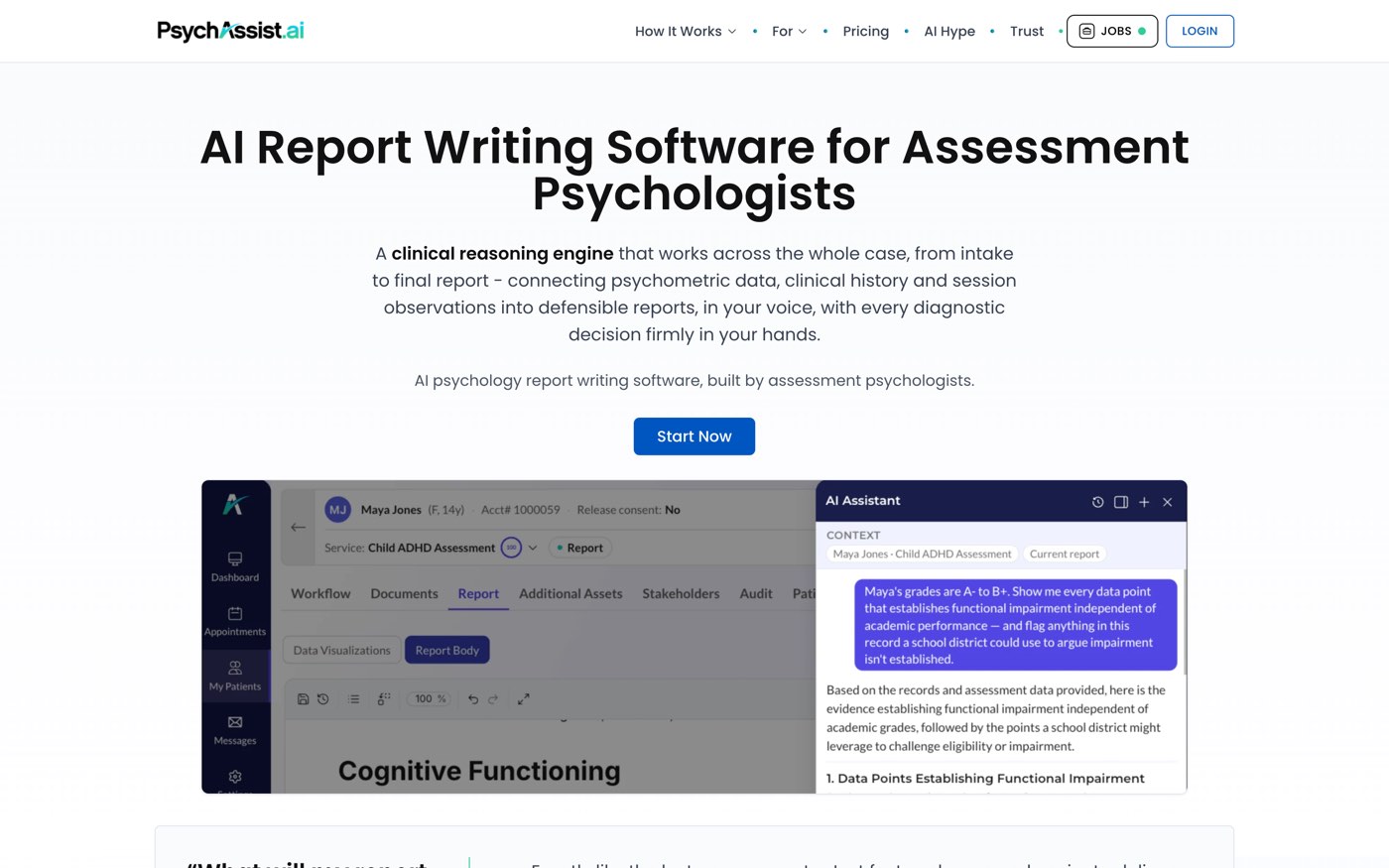
An end-to-end platform for assessment psychology, from intake through the signed report and the documents that follow it. A clinical reasoning engine holds the structured case file, reasons across the full battery at once, surfaces evidence that diverges from the formulation, and ties every claim to the measure, document or session note behind it.
For psychs looking for: the whole case in one place, where the report is an outcome of the workflow rather than a separate writing job, and every claim in it can be opened back to its source.
Tier 2 · Report generators and purpose-built drafting tools

Lightner
“A report writer designed specifically for evaluators”
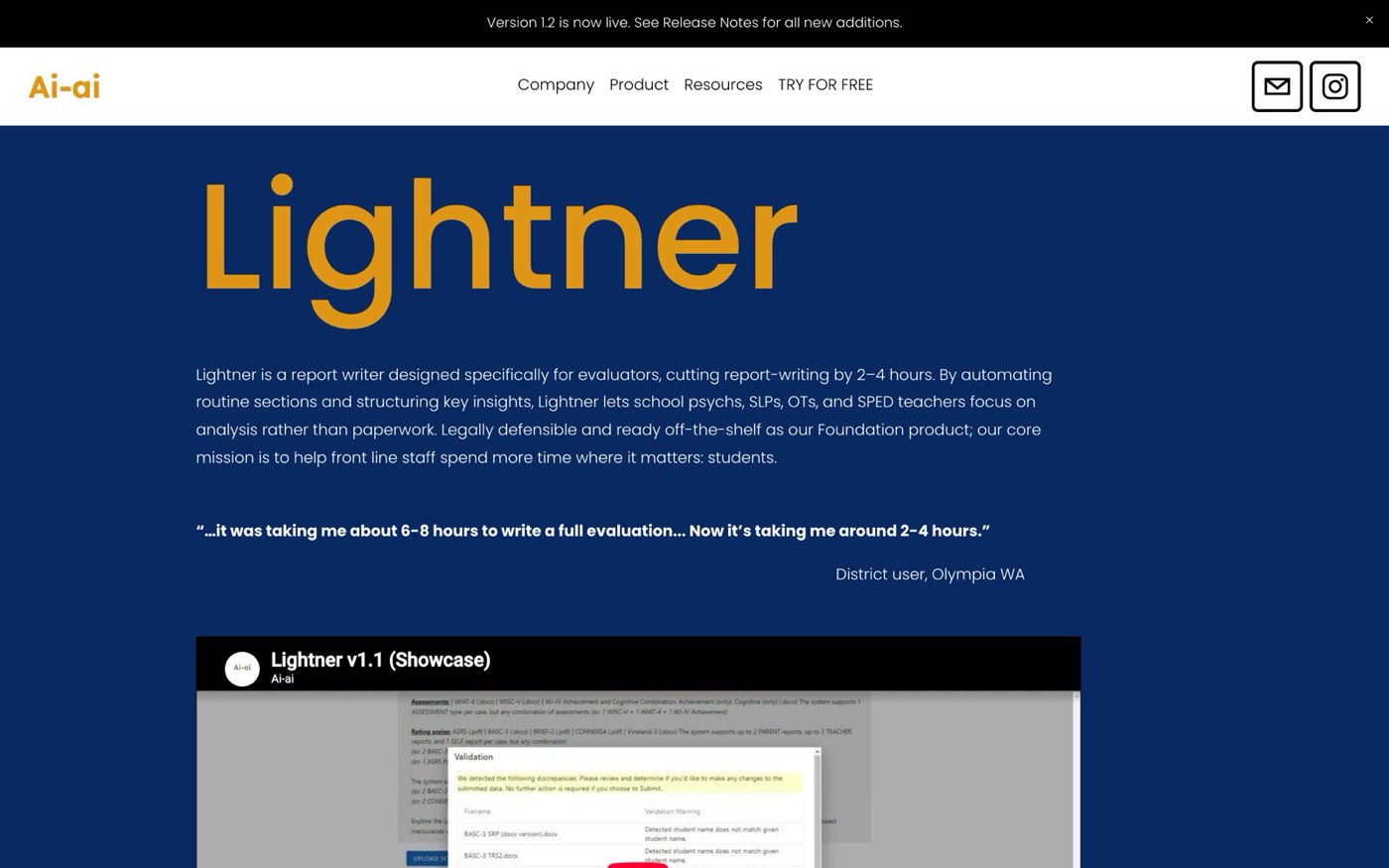
A report writing tool for educational evaluators that generates report content from supported rating scales and cognitive and achievement assessments. The site states it works by “automating routine sections and structuring key insights” so that evaluators “focus on analysis rather than paperwork”, and names the instruments it supports.
For psychs looking for: the routine sections of a school evaluation written for them at low cost, with the analysis staying firmly with the evaluator.

My Clinical Writer
“You do the thinking, AI does the writing”
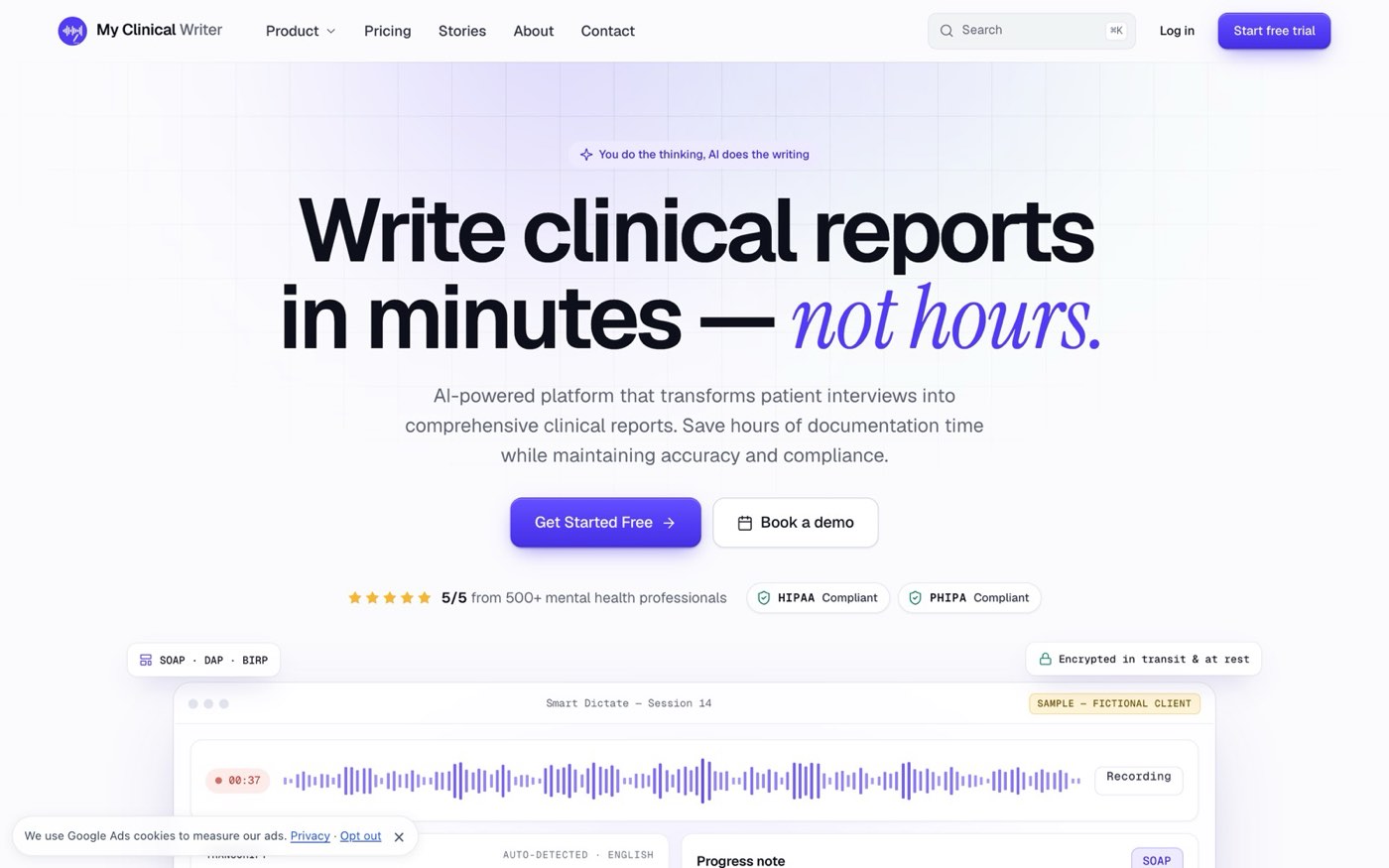
A documentation platform for mental health professionals that converts session recordings and clinical notes into standard note formats in a couple of minutes. Alongside drafting it offers handwriting and PDF extraction, a local records search, digital intake forms and superbill generation.
For psychs looking for: session documentation turned around fast - notes, summaries and superbills - with handwriting capture and intake forms alongside it.

PAR AI Report Writer
“Credible, Secure, Customizable: AI-Assisted Report Writer Built for School Professionals”
An AI-assisted report writer from the test publisher PAR, used inside PARiConnect. It generates psychoeducational report drafts from uploaded evaluation documents, notes and score reports, with section-by-section editing and regeneration. Its first report type is the PsychEd Report, and a Diagnostic Considerations feature is in beta. PAR acquired Assessment Assist AI in July 2025, and this is the product that followed.
For psychs looking for: psychoeducational report drafting inside the publisher's own platform, with the instruments they already use and the strongest published position on conflicting evidence of any tool here.

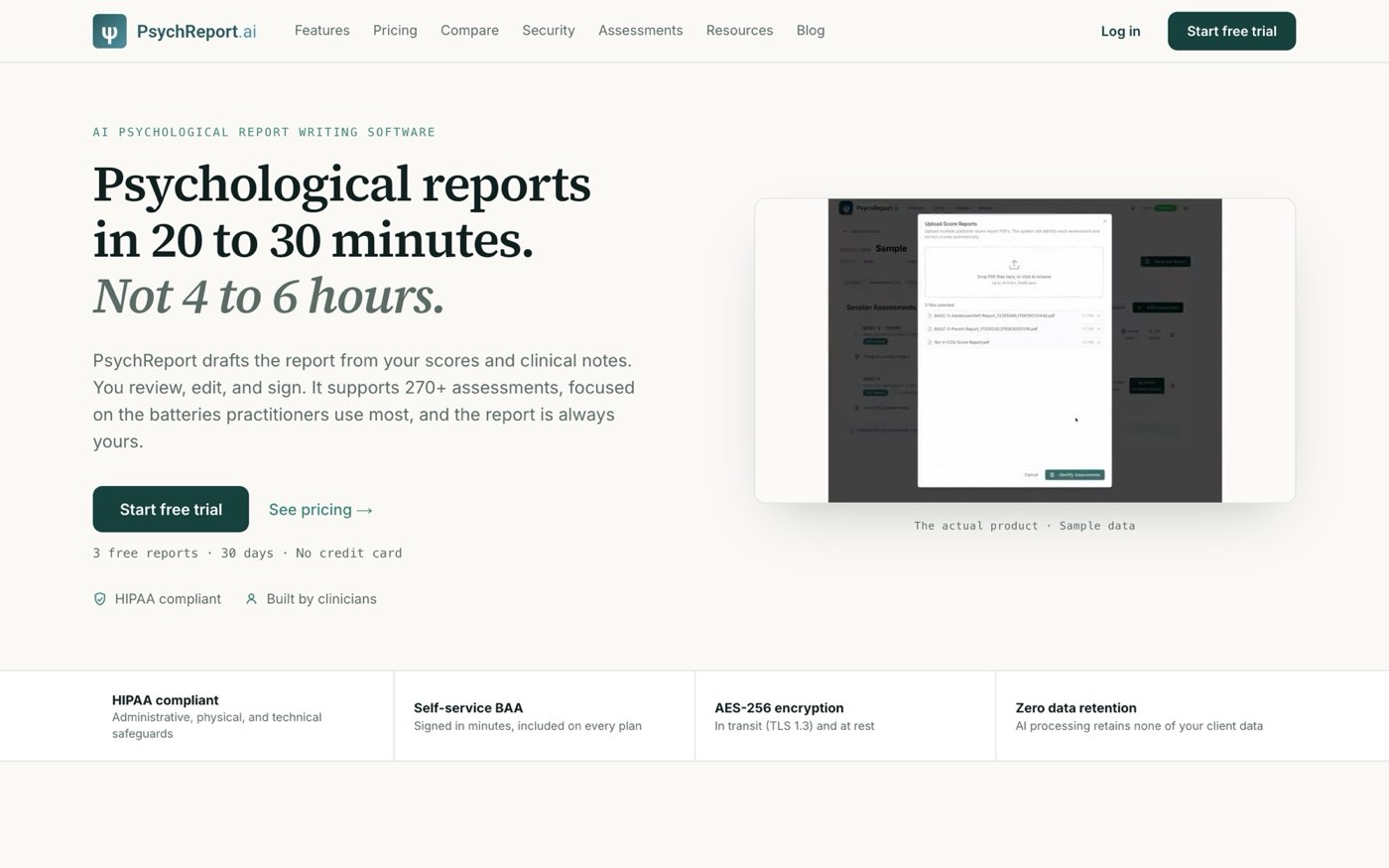
PsychReport.ai
“Psychological reports in 20 to 30 minutes. Not 4 to 6 hours.”
A report writing tool that drafts a psychological report from entered or uploaded test scores plus clinician notes, which the clinician then edits and signs in a built-in editor before exporting to Word or PDF. The site states support for over 270 assessments, “focused on the batteries practitioners use most”, and describes a four-step workflow rather than a chat interface: “No chat prompts, no starting from a blank page.”
For psychs looking for: a structured, no-blank-page draft from scores and notes, with a BAA you can sign yourself in minutes and a short, honest list of what it does.

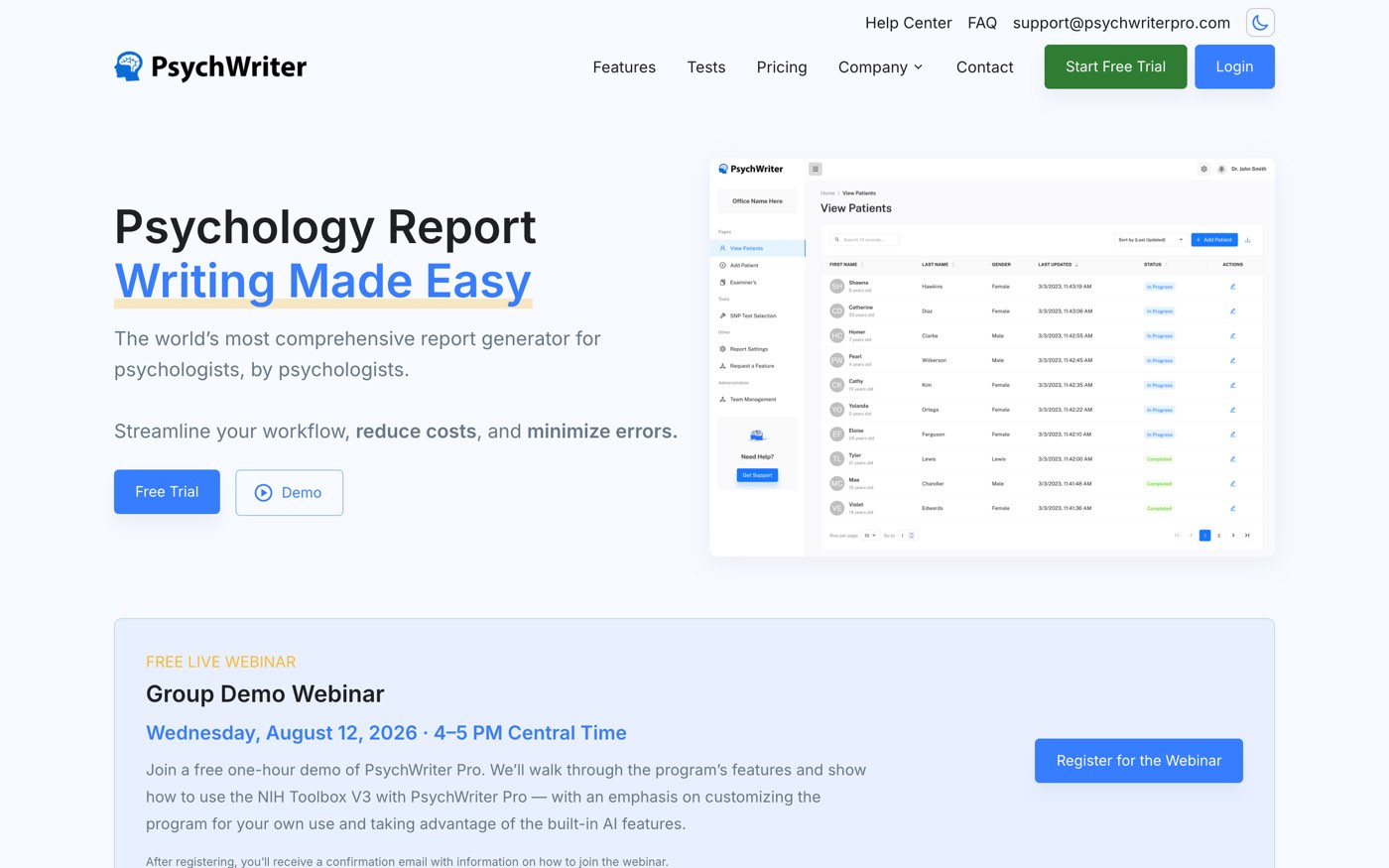
PsychWriterPro
“Psychology Report Writing Made Easy”
A web application that builds psychological reports from entered test score data. It automatically generates score tables, classifications and confidence intervals, stating that subtests are categorised using the School Neuropsychology and Cattell-Horn-Carroll model, and adds an AI Writer Assistant for drafting interpretative narrative and recommendations box by box.
For psychs looking for: automated score tables, classifications and confidence intervals across a very wide test list, with AI assistance per narrative box rather than a whole-report draft.

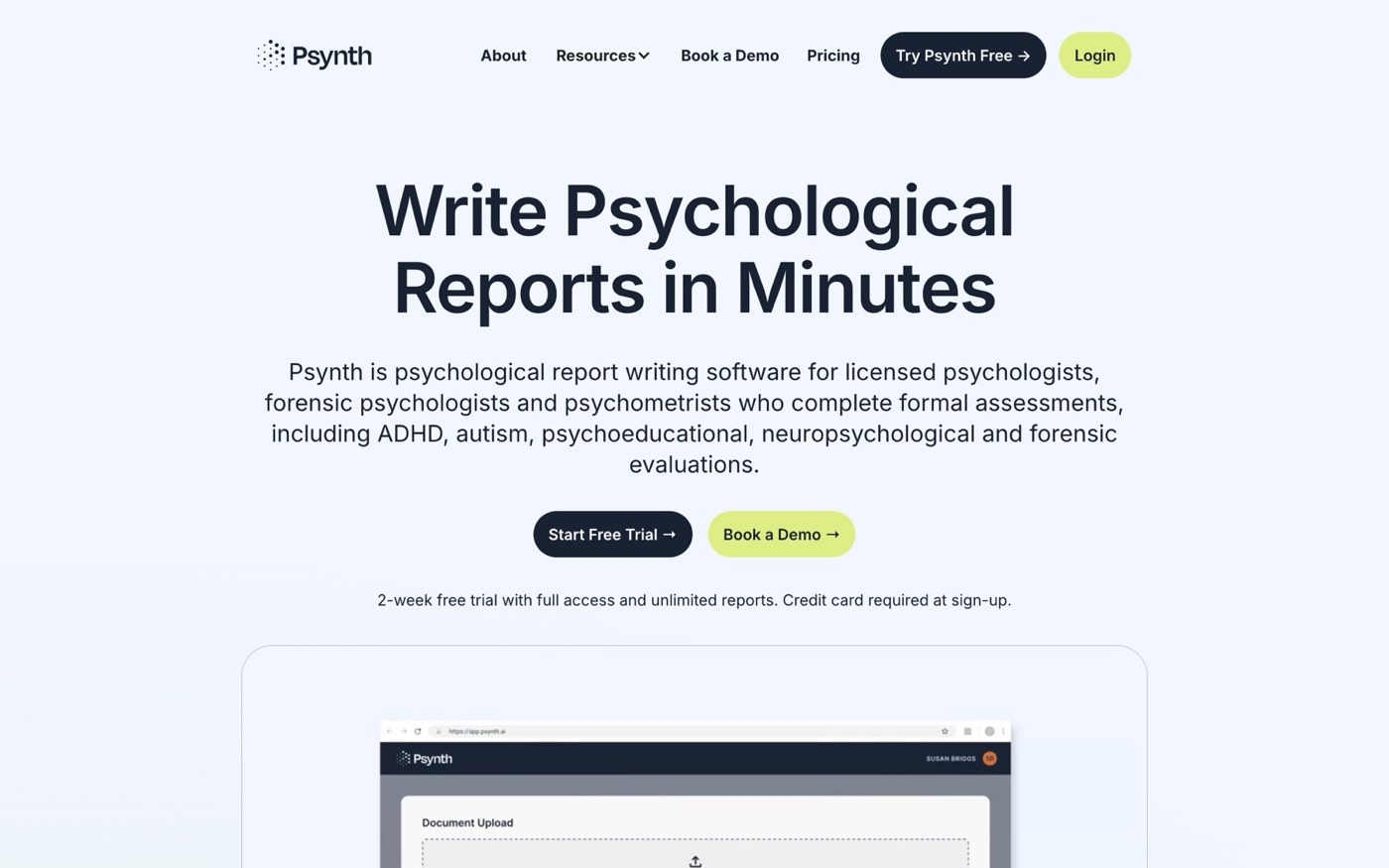
Psynth
“Write Psychological Reports in Minutes”
An AI report writing platform that turns uploaded test results, intake documents, session audio and clinical observations into structured psychological assessment drafts for clinician review and editing. The site states support for over 450 assessments, quality control checks that flag inconsistencies, and export to PDF, Word, SharePoint or Google Drive.
For psychs looking for: a fast, well-formatted assessment report drafted from scores you have already run, with wide test coverage and export into the tools you already use.

Reverb
“Refined reports. Defined results.”
A report writing platform for testing psychologists that generates clinical reports from uploaded case data using customisable templates. The site states it produces “automatic document summaries, conceptualization, recommendations, and score table creation”, supports hundreds of measures, and is accessed through a web-based portal. There is no self-serve sign-up; access starts with a demo request.
For psychs looking for: a hand-built report template of their own, built with them, from a company founded inside an assessment practice.

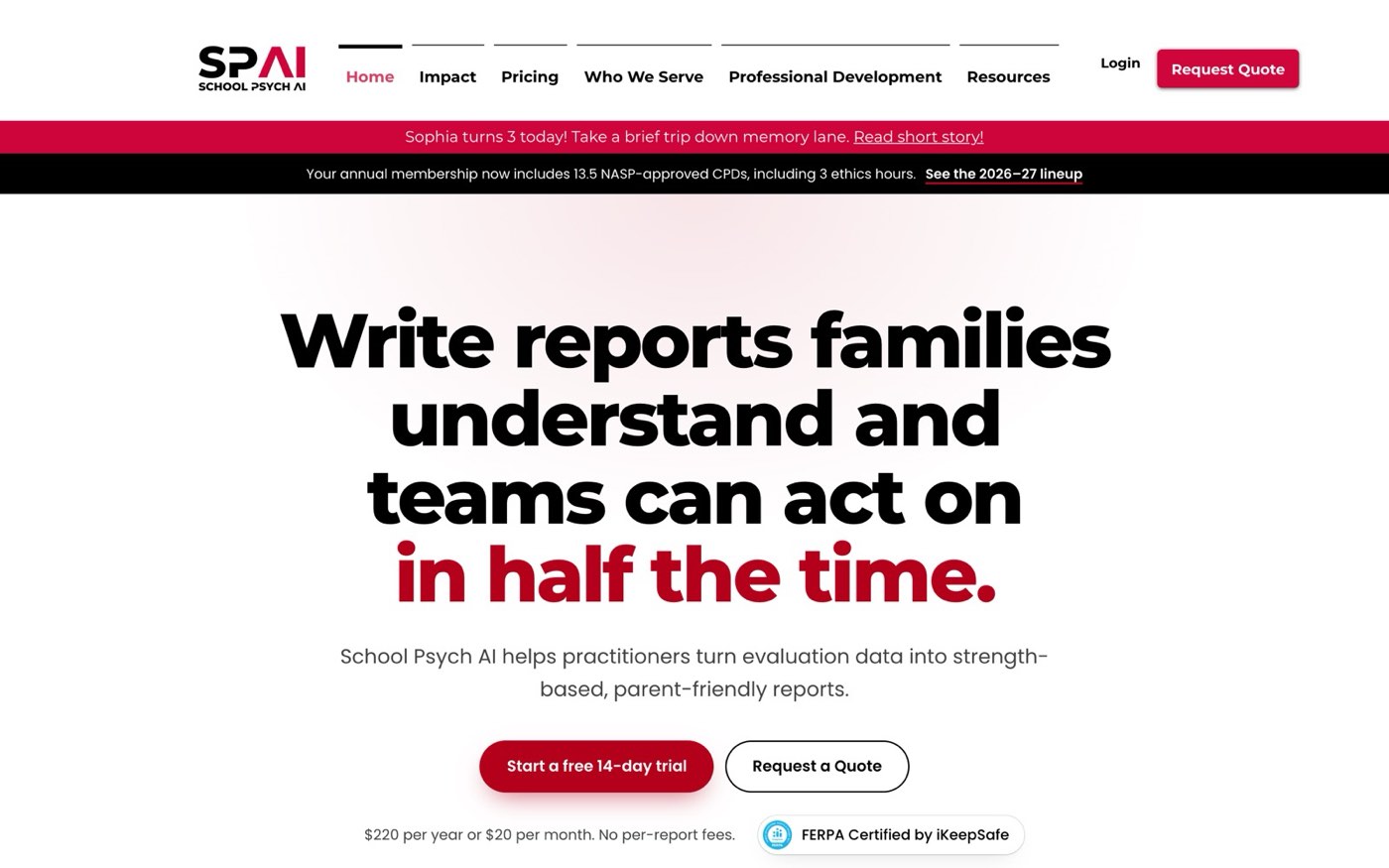
School Psych AI
“AI Platform for School Psychologists & IEP Teams”
A platform of AI tools for school psychologists and IEP teams, including a report writing tool called Studio Writer alongside AI literacy, ethics guidance and professional development material. The site states it “helps practitioners write strength-based, parent-friendly reports that families understand and teams can act on”, and the company announced FERPA certification from iKeepSafe in February 2025.
For psychs looking for: strength-based, parent-friendly school reports, alongside AI literacy and professional development material for a whole team.
Tier 1 · General-purpose AI

BastionGPT
“The AI built for clinical work”
A HIPAA-compliant AI assistant for healthcare documentation, giving access to several underlying models inside a covered environment. It drafts clinical notes in standard formats, transcribes sessions, analyses uploaded documents and integrates with EMR systems.
For psychs looking for: a HIPAA-covered general assistant for notes, summaries and record review across a whole practice, rather than something built around the assessment battery.

Compare on what you actually need
Tick your requirements. The table reorders to put the tools that state all of them first. Every mark reflects what the vendor publishes on their own site, read on 1 October 2026.
Read our own row sceptically. These columns come from the standard we published, so of course we state all of them, and our ticks are self-reported exactly like everybody else’s. The only answer worth having is a live demo where you ask any vendor, us included, to prove one.
| Tool | Reads the full battery | Intake to signed report | Claims trace to a source | Surfaces divergent data | Clinician approval gate | Exportable audit trail | Writes in your voice | Ambient session scribe | Derived documents | BAA offered |
|---|---|---|---|---|---|---|---|---|---|---|
| PsychAssist.aioursTier 3 | ✓Stated by the vendor | ✓Stated by the vendor | ✓Stated by the vendor | ✓Stated by the vendor | ✓Stated by the vendor | ✓Stated by the vendor | ✓Stated by the vendor | ✓Stated by the vendor | ✓Stated by the vendor | ✓Stated by the vendor |
| LightnerTier 2 | —Not part of this tool | —Not part of this tool | ?Not stated publicly | ?Not stated publicly | ?Not stated publicly | ?Not stated publicly | ?Not stated publicly | ?Not stated publicly | ?Not stated publicly | ?Not stated publicly |
| My Clinical WriterTier 2 | —Not part of this tool | —Not part of this tool | ?Not stated publicly | ?Not stated publicly | ?Not stated publicly | ✓Stated by the vendor | ?Not stated publicly | ✓Stated by the vendor | ?Not stated publicly | ✓Stated by the vendor |
| PAR AI Report WriterTier 2 | ?Not stated publicly | —Not part of this tool | ?Not stated publicly | ✓Stated by the vendor | ?Not stated publicly | ?Not stated publicly | ?Not stated publicly | ?Not stated publicly | ?Not stated publicly | ?Not stated publicly |
| PsychReport.aiTier 2 | ?Not stated publicly | —Not part of this tool | ?Not stated publicly | ?Not stated publicly | ?Not stated publicly | ✓Stated by the vendor | ✓Stated by the vendor | ?Not stated publicly | ?Not stated publicly | ✓Stated by the vendor |
| PsychWriterProTier 2 | —Not part of this tool | —Not part of this tool | ?Not stated publicly | ?Not stated publicly | ?Not stated publicly | ✓Stated by the vendor | ?Not stated publicly | ?Not stated publicly | ?Not stated publicly | ?Not stated publicly |
| PsynthTier 2 | ?Not stated publicly | —Not part of this tool | ?Not stated publicly | ?Not stated publicly | ?Not stated publicly | ?Not stated publicly | ?Not stated publicly | ✓Stated by the vendor | ?Not stated publicly | ✓Stated by the vendor |
| ReverbTier 2 | ?Not stated publicly | —Not part of this tool | ?Not stated publicly | ?Not stated publicly | ?Not stated publicly | ?Not stated publicly | ✓Stated by the vendor | ?Not stated publicly | ?Not stated publicly | ?Not stated publicly |
| School Psych AITier 2 | ?Not stated publicly | ?Not stated publicly | ?Not stated publicly | ?Not stated publicly | ?Not stated publicly | ?Not stated publicly | ?Not stated publicly | ?Not stated publicly | ?Not stated publicly | ?Not stated publicly |
| BastionGPTTier 1 | —Not part of this tool | —Not part of this tool | ?Not stated publicly | ?Not stated publicly | ?Not stated publicly | ?Not stated publicly | ?Not stated publicly | ✓Stated by the vendor | ?Not stated publicly | ✓Stated by the vendor |
✓ the vendor states it · — not what the tool sets out to do · ? not stated publicly. A blank is not a criticism: plenty of good tools simply do not publish this detail. Every row links to the sources we read.
Why we don’t rank these by price
You will not find a pricing table on this page. Prices in this category move constantly, a table of them is out of date within a quarter, and it is the wrong thing to choose on in any case.
Here is the part worth saying plainly, and it cuts against our own interest as much as anyone’s: a very low price and an instant free trial tell you something real about what you are buying. Not that the tool is bad. That it is cheap to run.
A system that reads a whole battery, holds structured data, carries provenance on every claim and runs reasoning across the full file is expensive per report, and it needs configuration before it fits your practice - your measures, your templates, your voice, your workflow. That is work, and it happens before anyone can hand you something useful. A tool you can be inside of in ninety seconds with a credit card is, almost by definition, doing something lighter: a block editor with good phrasing, or a scribe.
Those lighter tools are genuinely useful and some psychologists need exactly that. Just buy them knowing which one you bought. The question is not “what does it cost” but “what does it carry, and what am I still carrying?”
Questions about this list
- What is the best AI report writer for psychologists?
- There is no single best one, and any list that crowns a winner without asking what you do all day is selling something. The useful question is which of three kinds you need: a general-purpose assistant, a purpose-built drafting tool or scribe, or a clinical reasoning engine that holds the whole case. Sort by that first, then compare inside the tier.
- Why does PsychAssist list its own competitors?
- Because a psychologist deciding where their clinical documentation goes deserves the whole picture rather than our half of it, and because this field needs a shared way to talk about what separates these products. We are listed under the same headings as everyone else, and every fact about another tool comes from that tool's own published material, with sources.
- How are the tools on this page ranked?
- They are not ranked best to worst. They are sorted into the three kinds of AI in our field, because that difference predicts what a tool does when your data contradicts itself. Within each tier the tools are listed alphabetically, with ours first in its own tier and clearly marked as ours.
- Why is there no pricing comparison?
- Prices in this category change constantly and a table of them misleads within a quarter. What is worth knowing is structural: a very low price and an instant free trial usually mean a lighter tool, because reading a full battery and carrying provenance on every claim is expensive to run and needs configuring to your practice first.
- What does “not stated” mean in the comparison table?
- Exactly that: the vendor does not publish the detail, so we do not fill it in. It is not a criticism and not a failure. We would rather leave a blank than guess on a competitor's behalf, and we will correct any entry a vendor tells us is wrong.
- Is an AI scribe the same as an AI report writer?
- No. A scribe works from a session recording and produces a note of what was said. A report writer works from assessment data and produces a document that makes clinical claims about a person. Both are legitimate products; buying one while believing you bought the other is the expensive mistake.